Background
No record of the design process seems to exist. Inquiries to Balfour were unanswered. Squadron ring representatives may be able to provide some insight into the process. Absent that, it is likely that the design was the result of collaboration between Balfour and the ring reps.
There were two ring companies competing for the ring contract: Balfour and Jostens. Joe O’Brien was the ring rep for CS-22 and presented the two proposals to the squadron class. He briefed that the choice recommended by the Ring Committee was the Balfour option, which was ultimately chosen by the class.
There are several required elements for each class crest. According to the Class of 1960, those elements at the time were:
1. The Polaris Star.
2. The Class Year.
3. A Saber.
4. A Falcon.
5. The Graduating Class Number.
6. The Class Motto.
The Class Ring and Crest Elements
This description of the ring elements is from the Ring Dining-In brochure.
The Chain of 59 Links
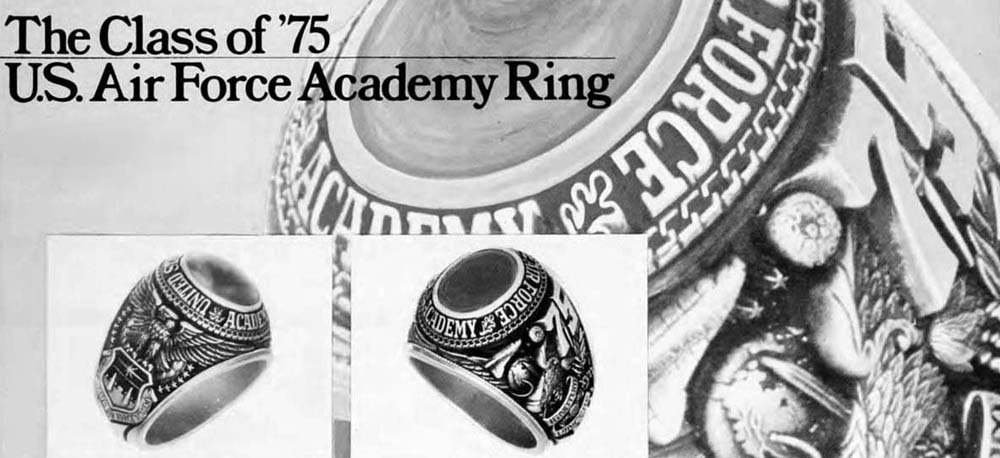
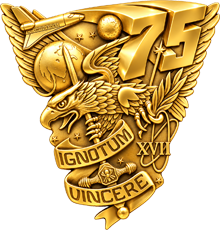
Beginning at the top, we see a chain containing 59 links surrounding the words "United States Air Force Academy". The significance of the 59 links is that, just as the Class of 1959 was the first link in the chain of Academy classes, so, too, does the Class of 1975 add its temper to the steel of excellence that is the hallmark of Air Force Academy Graduates. (Does not appear in the crest, only on the ring)
The Falcon
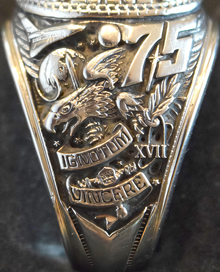
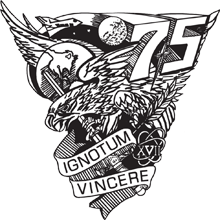
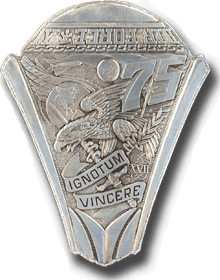
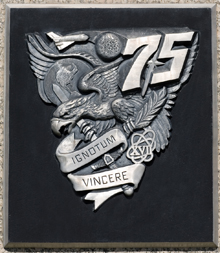
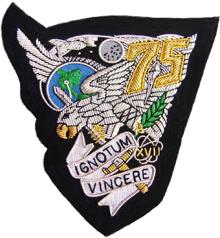
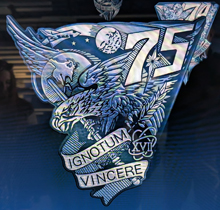
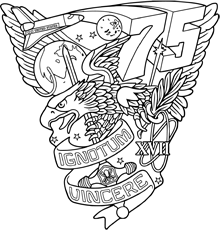
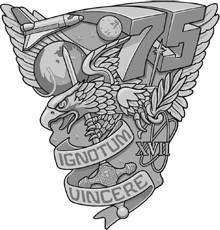
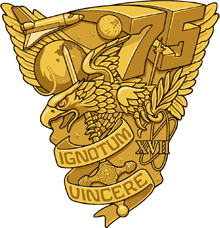
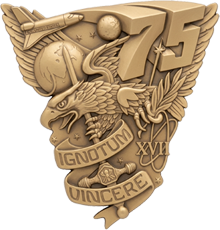
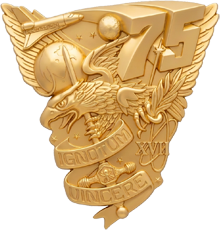
The dominant element in the body of the crest is the attacking falcon. Protectively shielded under his right wing is the Earth, with the United States and the North American continent showing predominantly. Coming out of the Earth, from a position close to Colorado, sweeping around to the left, behind the wing, beyond the moon and stars and ending over the left wing is the class numbers "75" with the star Polaris nestling within the numerals. This shows our beginning at the Air Force Academy and our future bound only by space.
Polaris
Polaris, the North, or Guiding Star, symbolically represents our directing guidance. “75" encloses the falcon in a protective arc, tying the class to the proud traditions of excellence and dedication of previous Academy classes. Like the space shuttle, the next major US space program, 1975 is the next class to graduate, and, as the shuttle is near the moon, so, too, has the Class of 1975 set its goals high.
The Sabre
Clutched in the right talon of the falcon is the blade of a sabre. Symbolically, holding the sabre point in the upraised position means challenge, or war, and the Class of 1975 is ready to do battle in any conflict in which our nation requires of us our services.
The Olive Branch
In the left talon, the falcon is clutching an olive branch, the symbol of peace. This shows the Class' desire for peace and determination to stand ready to defend our nation's desire for cooperation and coexistence.
The Atom
Hooked on one pounce is one of the orbits of the atom, linking the power of the atom to the seventeenth class, showing our willingness and ability to use that power in peace as well as war.
The Class Motto
Finally, the Class Motto, Ignotum Vincere, meaning “To Conquer the Unknown” is inscribed on a scroll that encircles the sabre. The motto is a simple expression of our determination to face, and conquer, whatever the future has in store.